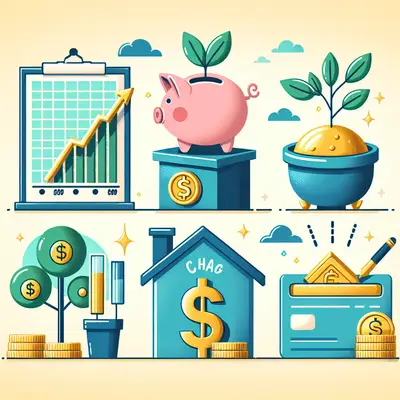
If your feed is all “hot picks” and “get rich this quarter,” this is your sign to hit pause. The real flex in 2025 isn’t guessing the next meme stock—it’s building an investment game so solid that trends become optional, not essential.
This is your glow-up guide: 5 actually trending ideas smart investors are obsessing over—not because they’re flashy, but because they quietly stack wealth in the background while everyone else chases hype.
1. From Stock Picking to “System Picking”
The new power move isn’t finding the perfect stock—it’s building a system that keeps you investing even when vibes are off and headlines are loud.
Instead of asking, “What should I buy this week?” more investors are asking:
- “What’s my rule for when and how I invest?”
- “How do I automate this so my emotions stop running the show?”
- “What’s my default option when I’m unsure?”
This is where automated, rules-based investing comes in—think dollar-cost averaging into broad index funds or ETFs at the same time every month, without needing a “feeling” about the market.
Why it’s trending with serious money people:
- It minimizes emotional decisions (aka panic selling and FOMO buying).
- It doesn’t require you to be “on” all the time.
- It’s easier to stick with during bear markets, corrections, and viral panic.
The real flex: instead of chasing alpha (market-beating returns) every week, people are designing personal investment systems that hit their long-term goals with way less stress. That’s the glow-up.
2. Risk Is the New Aesthetic: Curating Your “Downside Look”
TikTok, X, and Reddit love to talk about upside—10x gains, moon shots, “what if I’d invested $1,000 in…” scenarios. But the people actually stacking serious wealth? They’re obsessed with downside.
The new question isn’t just “What can this investment earn?” but:
- “How ugly does this get if things go wrong?”
- “How long could I hold this if it dropped 30–50%?”
- “What percentage of my net worth am I okay seeing on fire (on paper) during a crash?”
Instead of treating risk like a fine print detail, investors are curating their risk profile the way they curate their aesthetic:
- Core foundation: boring, diversified holdings like index funds, government bonds, or broad-market ETFs.
- Growth sleeve: higher-risk assets like small-cap stocks, thematic ETFs, or emerging markets—but in a defined percentage, not your entire portfolio.
- Moonbag: the small, experimental slice where you play with individual stocks, crypto, or bleeding-edge ideas—money you can afford to lose without losing sleep.
Risk management isn’t about killing your upside; it’s about making sure one bad bet can’t delete your future. That’s the real “I’m not like other investors” energy.
3. Dividends, Yield, and “Getting Paid to Wait”
In a world obsessed with quick flips, one old-school idea is having a major comeback: getting paid while you wait.
More investors are focusing on cash flow, not just price action. That means:
- Dividend-paying stocks
- Dividend-focused ETFs
- Bonds and bond funds for yield
- High-yield savings and money market funds for your “cash layer”
Why this is trending again:
- Interest rates changed the game. For years, “cash” paid almost nothing. Now, yields are meaningful again, and people are realizing you don’t need to go ultra-speculative just to get return.
- Psychological armor. Getting dividends or interest regularly helps investors stay invested through volatility—because you’re reminded that your money is still working even if the market is moody.
- Path to optionality. Over time, building a portfolio that throws off passive income gives you freedom: cutting work hours, funding travel, or reinvesting to accelerate your growth.
The new flex isn’t just, “Look at my portfolio value.” It’s, “My investments pay me monthly—even when I ignore them.”
4. Global Is the New Local: Investing Beyond Your Home Country
Your feed might be local, but your portfolio doesn’t have to be.
A big 2025 energy shift: more investors are actively breaking home-country bias—that tendency to only invest in companies from their own nation. They’re realizing:
- Big growth stories are often global, not domestic.
- Different countries and regions hit their peaks and slumps at different times—spreading risk across them can smooth your ride.
- Some sectors (like semiconductors, luxury goods, or energy) are dominated by companies outside your home market.
How people are going global without making it complicated:
- Global or international index ETFs that cover developed and emerging markets.
- Region-specific funds (like Europe, Asia-Pacific, or emerging markets) as a small slice of their portfolio.
- Multinationals listed in their home market but earning most of their revenue abroad.
The point isn’t to guess which country “wins,” but to build a portfolio that benefits from multiple economies evolving over time. While others argue on social media about which country is “finished,” diversified investors quietly own pieces of all of them.
5. Time Horizon Over Timeline: Designing Around Your Actual Life
Trend: Investors are realizing that “long term” isn’t just a finance buzzword—it’s the cheat code for building calm around money.
Instead of thinking, “Will this do well this year?” the smarter question is:
- “What is this money for?”
- “When will I realistically need it?”
- “What level of volatility can I accept before I panic and sabotage myself?”
People are now bucketizing their money by time horizon:
- Short term (0–3 years): cash, high-yield savings, money market funds—no drama, minimal risk.
- Medium term (3–10 years): more balanced mix of stocks and bonds; growth-focused, but not wild.
- Long term (10+ years): heavier stock and growth exposure, where volatility is a feature, not a bug.
This shift changes everything. A market drop doesn’t feel like a crisis if it only hits the “2038 money,” not the “I need rent next year” money.
The real glow-up is aligning your investments with your life timeline so you can be aggressive, patient, and calm—at the same time.
Conclusion
The loudest investing content online is usually about the next big thing. But the most powerful moves trending with serious investors are… quieter.
They’re building systems, not chasing stock tips.
They’re styling their downside, not just fantasizing about upside.
They’re getting paid to wait, going global, and aligning portfolios with real-life timelines.
If you want your investments to feel less like a roller coaster and more like a well-run playlist that just flows in the background, these are the shifts to steal.
Share this with the friend who’s always sending you “urgent” stock tweets. Their portfolio deserves a glow-up too.
Sources
- U.S. Securities and Exchange Commission – Beginner’s Guide to Asset Allocation - Explains diversification, risk, and time horizon in building portfolios
- Vanguard – Principles for Investing Success - Covers long-term focus, global diversification, and disciplined strategies
- Fidelity – Dollar-Cost Averaging Explained - Breaks down rules-based investing and automated contributions
- Morningstar – The Case for International Diversification - Discusses why investing globally can improve risk-adjusted returns
- Federal Reserve – Consumer & Investor Resources - Provides educational materials on risk, interest rates, and investment basics
Key Takeaway
The most important thing to remember from this article is that this information can change how you think about Investment Tips.