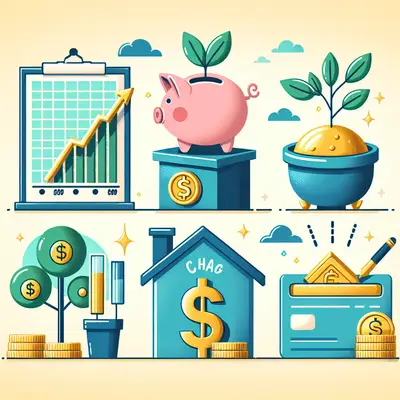
The market isn’t just numbers right now—it’s a whole mood. Rates, AI, election noise, “soft landing” debates… it’s chaotic, but it’s also one of the most interesting windows for smart investors in years. This is where strategy beats scrolling, and where your next moves can quietly compound into something big while everyone else is doom-posting.
Let’s break down the five investment vibes that are actually worth paying attention to—and how to turn them into real plays, not just hot takes.
1. From YOLO to “Yield Core”: Cash Is Finally Paying You Again
Cash used to be that boring friend you only called in a crisis. Now? It’s the one picking up the check.
With interest rates elevated compared to the 2010s, short-term Treasuries, high-yield savings, and money market funds are suddenly legit yield engines, not just parking lots. For investors, that changes the entire baseline of what “good returns” look like.
Why this matters for your strategy:
- You don’t have to go full risk-on to earn something meaningful.
- 3–5% yields on relatively low-risk vehicles can act as your portfolio’s “calm core.”
- That core can buy you emotional stability: it’s easier to stay invested in volatile assets when part of your money is quietly earning steady interest.
- You can ladder short-term Treasuries (3, 6, 12 months) to keep flexibility while still capturing yield.
Shareable mindset shift: the new flex isn’t just chasing 20% moonshots—it’s having a yield core that works even when the hype cycle cools off.
2. The “AI Everywhere” Trade: Owning the Picks, Shovels, and Side Quests
Everyone’s talking AI, but “AI stocks” are more than just the obvious headliners. If the internet was a gold rush, AI is the new one—and the smartest money often buys picks and shovels, not just the gold.
Three layers of the AI play:
- Core infrastructure: chipmakers, cloud giants, data-center players
- Enablers: cybersecurity, networking, power infrastructure, industrial automation
- Adapters: companies in boring industries (healthcare, logistics, manufacturing) using AI to cut costs and boost margins
How to approach it without FOMO:
- Use broad ETFs that track sectors like semiconductors or tech rather than betting your entire thesis on a single name.
- Watch earnings calls: companies that can show actual productivity or revenue lifts from AI deserve more of your attention than those just saying “AI” 20 times on the call.
- Remember valuations: AI is powerful, but price still matters. A great company at a wild price can still be a bad investment.
Shareable angle: The AI meta isn’t just “Which AI stock?” It’s “Which industries quietly get more profitable because of AI?”
3. Small But Mighty: Why Smaller Companies Are Back on the Radar
For years, mega-cap giants have dominated market returns and headlines. But under the surface, small- and mid-cap stocks are setting up like a discounted section with real potential.
Why finance nerds are watching this:
- Smaller companies often benefit more directly from easing inflation and stable or falling rates.
- Many trade at cheaper valuations than their mega-cap peers, despite solid balance sheets.
- Historically, there have been long stretches where small caps outperform large caps—especially coming out of uncertain periods.
How to tap in without over-concentrating:
- Use small-cap or mid-cap index funds/ETFs to spread risk across hundreds of companies.
- Focus on quality: look at funds tilted toward profitable, cash-generative small caps vs. speculative story stocks.
- Treat this as a multi-year allocation, not a quick flip. Small caps can be more volatile month-to-month but rewarding over longer horizons.
Shareable takeaway: While everyone argues over the same seven mega-stocks, the real sleeper upside may be hiding in the small-but-mighty lane.
4. Dividend Streams in a Volatile World: Cash Flow as a Superpower
When markets feel jumpy, dividends suddenly look a lot like comfort food. But the real power play isn’t just chasing the highest yield—it’s building a durable income stream that can grow over time.
What’s trending among income-focused investors:
- “Dividend growth” instead of just “high yield”: companies with a track record of raising payouts.
- Blending dividend ETFs with handpicked names in sectors like consumer staples, utilities, and quality financials.
- Using dividends as auto-reinvest fuel in your accumulation years, then as a cash flow source later.
Things to watch out for:
- Ultra-high yields can be a red flag; sometimes the market is signaling that payout isn’t sustainable.
- Look at payout ratio (how much profit goes to dividends) and cash flow, not just the headline yield.
- Diversify across sectors so one regulation change or disruption doesn’t nuke your whole income stream.
Shareable concept: Capital gains are cool, but getting paid while you wait is the underrated flex of long-term investing.
5. The New Core Skill: Building a “Scenario-Ready” Portfolio
The loudest question right now: Soft landing or hard landing? Rate cuts or higher-for-longer? The honest answer: nobody knows. The winning move isn’t predicting the future—it’s building a portfolio that doesn’t require you to be right about everything.
What a scenario-ready setup can look like:
- Equities: your main growth engine (global, not just home country).
- Bonds / cash-like assets: ballast and yield to offset volatility.
- Real assets: REITs, infrastructure, or broad commodities exposure if it fits your risk profile.
- Thematic slices: a capped percentage (say 5–15%) for things like AI, clean energy, or other high-conviction themes.
Key principles:
- Automate contributions so you’re buying through the noise, not trying to time peaks and crashes.
- Rebalance periodically: trim what’s overheated, add to what’s lagged, stay aligned with your target mix.
- Match your risk level to your timeline. Money you need in 1–3 years shouldn’t be riding stock market rollercoasters.
Shareable line: Instead of trying to call the next big macro twist, focus on building a “scenario-ready” portfolio that survives plot twists you never saw coming.
Conclusion
This market era is messy, noisy, and weird—and that’s exactly why it’s full of opportunity for investors who bring vibes and discipline.
You don’t need to outguess the Fed, pick the next trillion-dollar winner, or live on candlestick charts. You need:
- A yield core that keeps working in the background
- Thoughtful exposure to the AI wave, not just the buzzwords
- An eye on small- and mid-cap upside beyond the usual headliners
- Dividend streams that pay you while you play the long game
- A scenario-ready portfolio that doesn’t panic every time the news cycle refreshes
The real alpha right now? Showing up consistently, thinking in years instead of weeks, and building a portfolio that feels less like a gamble and more like a strategy.
Sources
- Federal Reserve – Monetary Policy & Interest Rates - Official information on rate decisions and policy, crucial for understanding the backdrop for yields, bonds, and equity valuations.
- U.S. Securities and Exchange Commission – Beginners’ Guide to Asset Allocation - Explains diversification and portfolio construction, supporting the “scenario-ready” portfolio concept.
- Morningstar – What Is Dividend Growth Investing? - Deep dive into dividend growth strategies and how investors can use them for income and total return.
- McKinsey & Company – The Economic Potential of Generative AI - Analysis of how AI is transforming productivity across sectors, informing the AI investment angle.
- S&P Dow Jones Indices – SPIVA Scorecards - Data on how active managers perform versus index benchmarks, relevant for understanding index funds/ETFs and long-term equity strategies.
Key Takeaway
The most important thing to remember from this article is that this information can change how you think about Investment Tips.