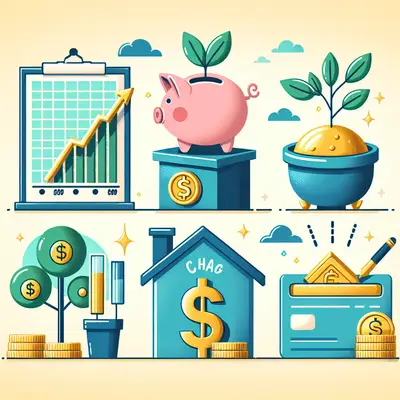
If your portfolio feels like it’s still running on 2015 settings while the world’s on 2x speed, it’s time for a glow-up. Today’s investors aren’t just buying random stocks and hoping for the best—they’re remixing data, tech, and trends into smart, flexible strategies built for constant change.
Let’s break down five trending investment moves that money nerds, finance TikTok, and serious pros are all quietly aligning on—and how you can plug them into your own game plan.
1. “Core & Explore”: The New Default Portfolio Vibe
The old-school split of “stocks vs. bonds” is getting a serious upgrade. More investors are moving to a Core & Explore setup: a boring-on-purpose foundation plus a small, high-conviction “playground” on top.
How it works:
- Core:
- Broad, low-cost index funds (think S&P 500, total market, or global stock ETFs)
- Goal: capture market growth, reduce single-stock drama
- Explore:
- A smaller slice (often 5–20% of your portfolio)
- Used for individual stocks, themes (AI, clean energy, cybersecurity), or niche ETFs
Why it’s trending:
- It lets you participate in big upside trends without nuking your long-term plan if one idea flops.
- It’s easy to automate the core, and manually fine-tune the explore.
- It fits all styles: passive at the base, active at the edges.
Quick starter template (not financial advice, just an example):
- 80–90% in: total U.S. market ETF + international ETF + bond ETF
- 10–20% in: individual stocks or sector ETFs you’ve deeply researched
The energy online isn’t about “all-in on the hottest stock” anymore—it’s about structured risk-taking, where the wild ideas live inside a disciplined framework.
2. Cash Has a Comeback Arc: High-Yield Parking as a Strategy
For years, “cash is trash” was the meme. Not anymore. With short-term interest rates higher than they’ve been in over a decade, cash is suddenly a real character in your portfolio—not a background extra.
What’s hot now:
- High-yield savings accounts (HYSAs):
- FDIC-insured banks offering yields way above traditional savings
- Money market funds:
- Often used in brokerage accounts for idle cash
- Short-term Treasury bills (T-bills):
- Government-backed, widely considered low risk
Why finance nerds love this move:
- You can earn meaningful yield on cash you’re not investing yet.
- It gives you optionality—dry powder ready for market dips or new opportunities.
- It creates a real “yield bar”: if an investment doesn’t clear your cash yield (after risk), it’s easier to skip.
Instead of leaving excess cash to die in a 0.01% account, investors are turning idle money into a low-drama, income-producing holding pen. It’s not exciting—but the returns vs. effort ratio absolutely is.
3. Dollar-Cost Averaging Meets Volatility: Scheduled Buying With a Twist
Dollar-cost averaging (DCA)—investing a fixed amount on a regular schedule—has always been a steady, responsible move. The twist now? Investors are pairing DCA with volatility awareness to lean in when markets get shaky rather than panicking.
The new-school DCA vibe:
- Non-negotiable base:
- Automatic contributions every paycheck or month into core funds
- Volatility booster:
- A rule like: “If the market (or target ETF) drops more than X% from recent highs, I temporarily increase contributions by Y%”
- Emotion filter:
- Pre-set rules mean you act before emotions hit, not during
Why this is catching on:
- It enforces buying when assets are on sale, not just when vibes are good.
- It helps investors avoid timing the market while still reacting intelligently to price swings.
- It’s easy to track and tweak with modern broker apps and spreadsheets.
This isn’t full-on day trading; it’s more like “rhythm trading with guardrails.” The point is to stay invested, keep it automated, and only add complexity where it genuinely improves your behavior—not your anxiety.
4. Theme Stacking: Betting on Mega-Trends Without Going All-In on One Name
Instead of YOLO-ing into the single “next big thing” stock, investors are increasingly going theme-first: identifying mega-trends, then building diversified baskets around them.
Popular themes right now:
- AI & automation: chips, cloud providers, software, data infrastructure
- Energy transition: renewables, grid infrastructure, EV supply chains
- Cybersecurity: security software, hardware, identity and access management
- Longevity & health tech: biotech, medical devices, digital health platforms
How theme stacking works:
- Start with a macro thesis (e.g., “AI integration across industries accelerates over the next decade”).
- Build exposure through a mix of:
- A broad sector or thematic ETF
- 2–5 individual companies with strong financials and real cash flows
- Keep each theme as a slice, not your whole plate—often 5–15% of the portfolio.
Why it’s share-worthy:
- You can talk, write, or post about a clear “investment storyline” instead of a random ticker.
- It allows long-term conviction without binary, all-or-nothing bets.
- It’s easier to track: You’re following a trend + handful of names, not 50 scattered positions.
The alpha isn’t just in finding the hot theme—it’s in pairing the narrative with actual balance sheets, revenue growth, and risk management behind the scenes.
5. Risk Budgeting: Treating Risk Like Currency You Choose to Spend
The newest flex isn’t just “I made X%.” It’s “I know exactly how much risk I’m taking to get that X%—and I’m cool with it.” That’s where risk budgeting comes in.
Instead of only asking “How much should I invest?”, more investors are asking:
- “How much volatility am I willing to tolerate?”
- “What percentage of my portfolio am I okay losing in a severe drawdown?”
- “Where does my risk exposure actually come from—stocks, leverage, concentration?”
Ways people are implementing risk budgets:
- Setting a max position size (e.g., no single stock >5% of portfolio value).
- Capping total “speculative bucket” exposure (e.g., all high-risk plays combined <10–15%).
- Using tools or broker analytics to track portfolio beta, sector concentration, and correlations.
- Matching risk levels to time horizon:
- Long-term goals (10+ years): higher equity exposure
- Short-term goals (1–3 years): more cash, bonds, T-bills
Think of risk like calories: you can eat what you want, but you should know the intake. The internet’s loudest stories are still the outliers, but the real edge is quietly moving toward intentional risk, not accidental chaos.
Conclusion
Investing in 2026 isn’t about copying the loudest person on your feed—it’s about syncing timeless principles (diversification, consistent investing, risk control) with modern tools and trends (thematics, high-yield cash, data-driven risk limits).
The moves winning attention now:
- Core & Explore as the new default structure
- Cash as a legit yield tool, not dead weight
- DCA supercharged with volatility-aware rules
- Theme stacking instead of single-name hero worship
- Risk budgeting as the ultimate adulting move for your portfolio
None of these require you to predict the future perfectly. They just require you to design a system that works even when you’re busy, emotional, or offline.
Build the system, stick to the rules, and let time and compounding do the heavy lifting.
Sources
- Vanguard: Principles for Investing Success – Overview of diversification, costs, and long-term investing frameworks
- Bogleheads Wiki: Asset Allocation – Deep dive into building core portfolios and aligning risk with time horizon
- U.S. Securities and Exchange Commission (SEC): Dollar-Cost Averaging – Explains DCA and how it helps manage market volatility
- Board of Governors of the Federal Reserve System: Selected Interest Rates – Official data on interest rates, useful for understanding cash yields and T-bills
- MSCI: Thematic Investing – Understanding the Drivers – Research and insights on building portfolios around long-term themes
Key Takeaway
The most important thing to remember from this article is that this information can change how you think about Investment Tips.