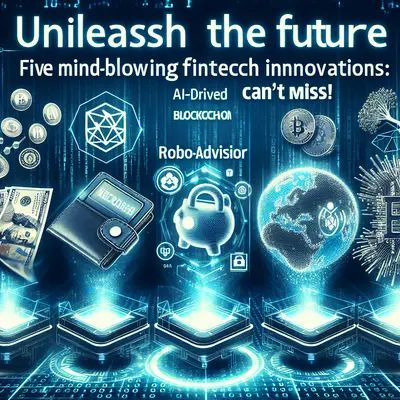
Fintech isn’t just “apps for money” anymore—it’s quietly turning your bank, your paycheck, and even your identity into pure software. From AI that negotiates your bills to tokenized everything, the entire money stack is getting rebuilt in real time. If you’ve ever wondered what’s actually worth paying attention to (beyond the hype), this is your new cheat code.
Below are five fintech shifts that money geeks, tech nerds, and everyday investors are sharing, debating, and screen-shotting right now.
AI Becomes Your Always‑On Money Co‑Pilot
The era of “log in, check balance, manually move money” is fading. AI is sliding from the background into the front seat of your finances—analyzing, predicting, and acting for you.
Banks are rolling out AI tools that forecast your cash flow, flag when your spending pattern looks off, and suggest smarter moves before you even think to ask. Robo-advisors are evolving from static risk profiles to dynamic systems that learn from your behavior, market conditions, and even macro news in real time.
The next level: AI that negotiates on your behalf. Think automated bots that try to lower your credit card APR, find cheaper insurance based on your real data, or recommend refinancing when your profile matches a better offer. This shifts fintech from “read-only dashboards” to action engines that move your money around in the background.
For finance enthusiasts, the question isn’t “Is AI coming to money?” It’s “How much control are you willing to delegate—and what guardrails do you demand?” The trade-off between automation and transparency is officially center stage.
Tokenization Turns Real‑World Assets Into Clickable Investments
Stocks and crypto were just the warm-up. The real buzz right now is tokenization—turning real-world assets (RWA) like real estate, private credit, art, and even carbon credits into digital tokens that can be traded 24/7.
Financial giants are no longer just watching from the sidelines. Major institutions are piloting tokenized funds, bonds, and money market products on blockchain rails, testing whether they can settle faster, cut costs, and unlock liquidity from traditionally illiquid assets. Suddenly, owning a fraction of a commercial building or a private credit pool doesn’t sound sci‑fi.
For fintech fans, this is a double flex: access plus speed. Instead of waiting days for settlement, tokenized assets can, in theory, move near-instantly. Instead of needing six figures to play in alternative assets, tokenization promises smaller minimums and programmable ownership rules built into the token itself.
Of course, regulation, custody, and interoperability are still messy. But the signal is clear: the most interesting part of “crypto” might not be coins at all—it’s the infrastructure quietly rewiring how value is represented and moved.
Embedded Finance Makes Every App Feel Like a Bank (Without the Bank Brand)
The most powerful fintech experiences in 2025 and beyond might not look like “fintech apps” at all. They’ll be your favorite ride-sharing app offering instant payout, your marketplace offering built‑in financing, or your B2B software quietly providing credit lines behind the scenes.
This is embedded finance: banking, payments, lending, and insurance woven directly into non-financial products. Instead of you going to a bank, the bank comes to wherever you already are—shopping, working, investing, or building a business.
Behind the scenes, Banking‑as‑a‑Service (BaaS) platforms and licensed institutions provide the regulated rails, while consumer brands own the interface and the relationship. For users, the win is seamlessness: fewer logins, fewer clunky transfers, and an experience that feels like one flow rather than “now go to your bank to finish this.”
For builders, embedded finance is a new revenue layer and data stream. For regulators, it’s a puzzle: who’s really responsible when something breaks—the app you see or the bank behind it? Watching how that tension plays out is one of the big fintech storylines to track.
Real‑Time Money Rails Go Global
Waiting days for money to clear is starting to feel like sending faxes. Real-time payment (RTP) networks are rolling out country by country, and they’re not just faster—they’re redefining how businesses and individuals think about cash flow.
In the U.S., FedNow joined The Clearing House’s RTP network, giving banks and fintechs new infrastructure to move funds instantly, 24/7. Globally, systems like India’s UPI, Brazil’s Pix, and the EU’s push for instant SEPA payments are setting the bar for what “normal” should look like.
Instant settlement changes behavior. Freelancers can get paid the minute work is approved. Small businesses can manage inventory and payroll with less guesswork. Consumers can move cash between platforms without the annoying “pending” limbo. It also unlocks new risk models for lenders, since they can see and react to real-time cash positions.
The flip side: fraud can move faster too, and risk systems need to be just as real-time as the payments themselves. The game is shifting from “How fast can we send money?” to “How fast can we verify, score risk, and block bad actors without slowing everyone else down?”
Identity, Privacy, and Compliance Go Full‑Stack Digital
As money goes fully digital, identity is becoming the ultimate key—and the biggest vulnerability. Fintech is in the middle of a high-stakes upgrade from password-based accounts to multi-layered digital identity stacks.
Know Your Customer (KYC) is evolving from clunky upload-your-ID flows into smoother, API-driven verification with biometric checks, device intelligence, and behavior analytics. On the back end, regulators are tightening Anti‑Money Laundering (AML) expectations, pushing fintechs and banks to collaborate on data sharing and more advanced monitoring.
Meanwhile, privacy concerns are rising. Users are asking tougher questions: Who sees my transaction data? How is it being used to train models or score my risk? Will open banking and data-sharing rules work in my favor—or just hand more power to a few big platforms?
This tension is spawning innovation: privacy-preserving analytics, zero-knowledge proofs for compliance checks, and “portable identity” concepts where you can verify yourself once and reuse that trust across platforms. The fintechs that win here will be the ones that make security feel invisible—but give users more transparency and control than ever.
Conclusion
Fintech isn’t a niche corner of finance anymore—it’s the operating system underneath how money moves, how value is stored, and how identity is verified. AI as your money co-pilot, tokenized assets, embedded finance, real-time rails, and next-gen identity are all converging into one thing: a world where your financial life is orchestrated by code.
For finance enthusiasts, this is the moment to move past the noise and focus on the rails, not just the apps. The stacks being built now will decide who owns the customer relationship, who controls the data, and who captures the upside from the next decade of money innovation.
If you’re watching this space, don’t just ask, “What’s the hottest app?” Ask: “Whose rails is it running on, and what does that unlock next?”
Sources
- Bank for International Settlements – Sound practices for the use of AI and ML in financial services – Overview of how AI is being integrated into banking and financial risk management
- World Economic Forum – Inside the tokenization of real-world assets – Explains tokenization and why institutions are exploring real-world asset digitization
- Federal Reserve – FedNow Service – Official details on the U.S. real-time payments infrastructure and its capabilities
- European Commission – Instant payments in euro – EU policy framework and rationale for instant payment rollouts
- U.S. Department of the Treasury – Financial Crimes Enforcement Network (FinCEN) – Covers AML, KYC, and evolving regulatory expectations for financial institutions and fintechs
Key Takeaway
The most important thing to remember from this article is that this information can change how you think about Fintech News.