Your money is officially entering its main character era. The old playbook of “clip coupons, don’t buy lattes, hope for the best” is over. Today’s money game is louder, smarter, and way more strategic—and finance enthusiasts are turning their feeds into mini MBA programs.
If you’ve been binge-watching market TikToks, scrolling money Twitter, or saving every “here’s how I retired at 35” reel, this one’s for you. These five trending power moves are exactly what people are sharing, testing, and flexing in 2025—and they go way beyond basic budgeting.
1. Cash Flow Is the New Flex (Not Net Worth)
Net worth screenshots used to be the ultimate financial flex. Now? It’s all about cash flow. People are waking up to the fact that a big net worth locked in a house or retirement account doesn’t help if you’re still sweating every bill cycle.
Cash flow is simply how much money is flowing in (income) versus out (expenses) every month. The trend: treat your personal finances like a business P&L statement. That means looking at recurring subscriptions, “quiet” lifestyle creep, and even how often you’re paying interest on revolving balances.
Creators are sharing income stack screenshots (salary + side hustles + dividends + rental profit) instead of just brokerage balances. The new goal isn’t “be a millionaire someday”—it’s “cover my life with automated income and keep my 9–5 optional.”
If you want in, start by categorizing your money into three flows: essentials, joy, and growth. Essentials keep you stable, joy keeps you sane, and growth (investments, skills, business) is what buys future freedom. Track all three and ask: is my cash flow building the life I say I want—or just funding autopilot habits?
2. The Skills Portfolio: The Asset Class Nobody Taught You About
Stocks and ETFs are great. But the most viral finance conversations right now aren’t just “What should I invest in?” They’re “What skills can I invest in that raise my earning ceiling?”
Enter the skills portfolio—treating your abilities like an asset class that compounds. Coding, design, copywriting, sales, data analysis, project management, AI tools, even niche crafts—these are being tracked like investments. People are listing their skills like holdings: beginner, intermediate, advanced, and how each one directly ties to potential income.
Why it’s trending: wages are shifting fast, AI is rewriting job descriptions, and people are tired of hoping for raises while everything else gets more expensive. The play is simple:
- Skill up in things that make money in multiple formats (employment, freelancing, consulting, content).
- Use your day job as a training ground, not your final destination.
- Treat courses, certifications, and mentorship fees as “upfront capital” for higher future cash flow.
Finance enthusiasts are posting “ROI on my skills” updates—how a $300 course turned into a $10,000 income boost in 12 months. When you realize your brain is your highest-yield asset, your Amazon cart and your calendar both change.
3. High-Yield Accounts and Automation: The New “Set It and Flex It”
The quiet hero of money TikTok right now? Boring-but-brilliant automation plus better cash parking.
High-yield savings accounts (HYSAs) and money market funds suddenly feel like cheat codes. With interest rates still elevated compared to pre-2020 levels, people are no longer okay with their emergency fund chilling at 0.01% while banks profit. The trend is:
- Move idle cash into HYSAs for short-term goals and emergency funds.
- Use automatic transfers synced to payday so saving doesn’t rely on willpower.
- Set up automatic investing into diversified ETFs or index funds so you’re dollar-cost averaging without thinking about timing the market.
Creators are posting side-by-side screenshots showing how much more they’re earning in interest after switching accounts or providers. What used to be “I’ll get to it one day” is now “Why am I gifting my interest to a legacy bank?”
The vibe: don’t just work harder for your money—make your money automatically work harder for you. The more you automate good decisions, the fewer chances you give your tired, scrolling-at-midnight brain to sabotage your plan.
4. Lifestyle Design > Lifestyle Creep
The “soft life” conversation has evolved—now it’s all about intentional lifestyle design instead of accidental lifestyle creep.
Lifestyle creep is when your spending quietly rises with your income, and suddenly your upgraded life doesn’t feel upgraded—just more expensive. What’s trending now is ruthless clarity about:
- What actually makes you feel rich in your daily life
- What’s just performative or algorithm-approved spending
- How to swap high-cost, low-joy habits for high-joy, smart-cost ones
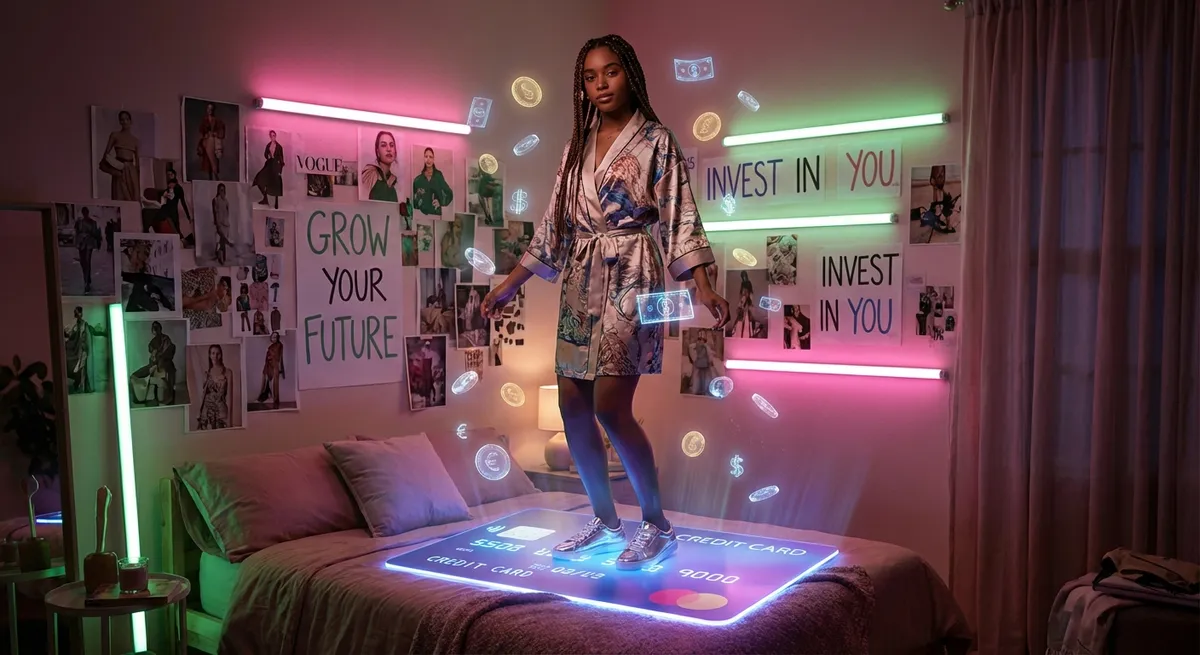
People are building “Money Mood Boards” that combine actual numbers with lifestyle goals: neighborhood type, work schedule, travel rhythm, family time, hobbies, even sleep. Then they reverse-engineer a money plan that supports that reality, instead of reverse-engineering their happiness around their bills.
Finance fans are posting “what I thought rich felt like vs. what it actually feels like for me” and the answers are surprisingly simple: less stress, more time, decent coffee, a savings cushion, and flexibility at work. The trend isn’t luxury for the feed—it’s alignment in real life.
5. Diversified Income as a Safety Net, Not a Hustle Badge
The hustle-culture era of “sleep is for the broke” is aging badly. The updated trend: diversified income for stability, not burnout flex.
People aren’t romanticizing 4 side hustles anymore. Instead, they’re focusing on one or two high-quality income streams they can realistically maintain:
- A main job that pays the bills (and preferably offers growth, benefits, or both)
- A single scalable side play—like digital products, consulting, content, or a small online shop
- Long-term passive-ish streams like index fund dividends or REITs
The spotlight is on risk management. Relying on a single employer, a single client, or a single app algorithm feels dangerous. Multiple income streams are being framed as a personal “financial stability stack”—your own version of diversification.
Creators are walking through their “if X disappears, Y and Z keep me afloat” plans. It’s not about grinding 24/7; it’s about not being one email or one layoff away from panic. The new flex isn’t “I never stop working”—it’s “I don’t have to freak out when something changes.”
Conclusion
This new wave of personal finance isn’t about being the most frugal or the most flashy—it’s about being the most intentional.
Cash flow over clout. Skills as assets. Automation as a cheat code. Lifestyle design instead of lifestyle creep. Diversified income for safety, not ego.
If any of these power moves hit, don’t keep them to yourself. Screenshot your cash-flow shift, share your skills portfolio glow-up, or post a before/after of your money system. Your feed doesn’t just have to be drama and memes—it can be receipts of your financial main character era.
Your money story is being written either way. You might as well grab the pen.
Sources
- Consumer Financial Protection Bureau – Emergency Savings - Explains why liquid savings and where you park cash (like HYSAs) matter for financial stability
- U.S. Bureau of Labor Statistics – Employment Projections - Data on fast-growing, high-paying occupations that informs “skills portfolio” strategies
- Investopedia – Dollar-Cost Averaging (DCA) - Overview of automated investing and why consistent contributions can reduce timing risk
- FINRA – Diversification and Asset Allocation - Covers how diversification reduces risk, a principle that also inspires diversified income streams
- Federal Reserve – Report on Economic Well-Being of U.S. Households - Research on household finances, cash flow stress, and financial resilience
Key Takeaway
The most important thing to remember from this article is that this information can change how you think about Personal Finance.