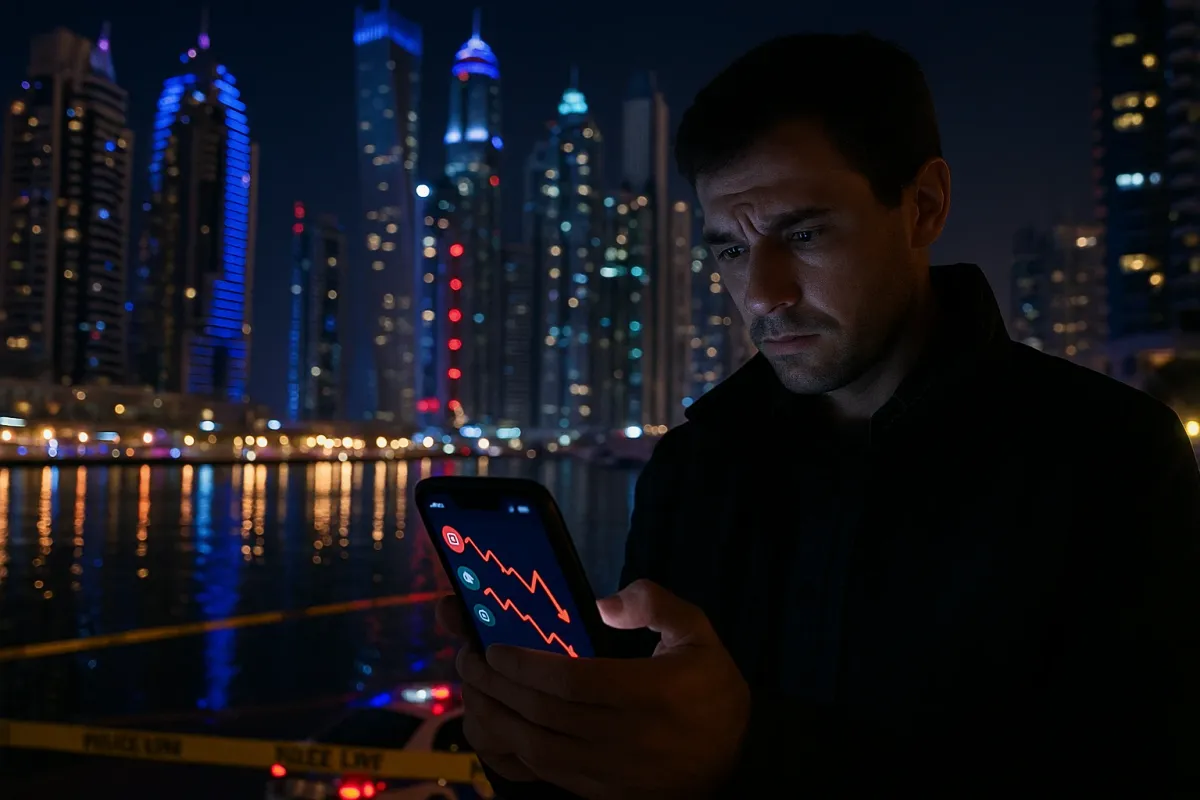
The most chilling crypto story of the week didn’t come from a market crash or an exchange hack—it came from a luxury resort in the Dubai desert. Reports about Roman Novak, a crypto investor allegedly kidnapped, held for ransom, and found dismembered alongside his wife Anna, are shaking the industry far beyond true-crime circles. It’s the kind of headline that makes even the most diamond-handed degen stop scrolling and think: how safe is my money, really?
This isn’t just horror-movie material. It’s a brutal reminder that when digital money meets real-world greed, the risks aren’t just “volatility” and “regulatory uncertainty.” They can get terrifyingly physical. Let’s break down what this moment says about where crypto, fintech security, and “getting rich online” are really headed right now.
Crypto Is No Longer Just Code — It’s a Physical-World Target
For years, crypto crime felt mostly digital: rug pulls, phishing scams, exchange hacks, and those infamous “I’m a prince, send BTC” DMs. The Dubai case underlines a darker evolution—high-net-worth holders are becoming physical targets, especially in regions where luxury, secrecy, and fast money collide. The alleged kidnapping and ransom demands show how easy it is for criminals to see crypto millionaires as walking hardware wallets. Unlike traditional bank accounts, which can be frozen or traced more easily, on-chain assets can be moved globally in minutes if someone gets access to your keys—willingly or not. The more people flex their gains online, the more they unknowingly paint targets on their backs. Fintech isn’t just about slick UX anymore; it’s about blending physical and digital security in ways we haven’t fully caught up with.
“Self-Custody” Sounds Cool—Until You’re the Weakest Link
Crypto culture has long pushed the mantra: “Not your keys, not your coins.” But here’s the flip side no one wants to post on X: when you are the only one with access, you also become the single point of failure. In extreme cases—like the Dubai story—that failure can be violently coerced. Criminals don’t need to hack a protocol when they can just hack… you. As more people move assets into cold wallets and hardware devices, we’re seeing a new wave of fintech players building “social recovery,” multi-sig wallets, and threshold signatures that require multiple approvals. The future of self-custody might look less like a lone hero with a Ledger and more like shared security: multi-party authentication, trusted recovery networks, and custody layers that don’t crumble the moment someone threatens you in real life. In other words, decentralization is growing up—and it has to.
Privacy Coins, Mixers, and the Arms Race for (and Against) Anonymity
Cases like this are exactly why regulators obsess over crypto anonymity tools. When ransoms can be demanded in Bitcoin, Monero, or via mixing services, the line between “financial privacy” and “crime enabler” becomes the battlefield of modern fintech. We’re watching a live tug-of-war: on one side, privacy-maxi builders who want censorship-resistant money; on the other, law enforcement and analytics firms racing to deanonymize on-chain flows. Big names like Chainalysis, TRM Labs, and Elliptic are expanding their toolkits to help track illicit funds even when criminals try to obfuscate them. After each high-profile crime, expect pressure to ramp up: more KYC, more tracking, more restrictions on privacy tools. The irony? The same tech that helps catch bad actors also chips away at the “borderless, permissionless” dream that made crypto magical in the first place.
The New Flex: Quiet Wealth and “Stealth Mode” Money
If 2021–2022 was the era of “crypto flex” culture—Lambos, watches, and “made it” posts—2025 is pivoting hard into stealth wealth. Stories like the Dubai incident are accelerating a trend already visible among serious money: going dark on net worth, using pseudonyms, spreading assets across multiple wallets, and layering holdings between centralized exchanges, DeFi, and traditional finance. Fintech apps are jumping on this too. We’re seeing more “privacy-first” neobanks and wallets, burner-card services, and platforms that let you separate your public identity from your actual holdings. The new power move isn’t screenshotting your PnL—it's building a stack so well-structured and low-key that no one, not even your closest friends, could guess your real on-chain value. Safety is becoming part of the aesthetic.
Fintech Security Is about to Get a Massive Reality Check
The Dubai case is a nightmare scenario, but it’s also a catalyst. Expect a new generation of fintech products built around personal risk management, not just returns and rewards. Think: integrated emergency protocols that lock wallets under duress, location-aware security triggers, multi-device approval flows, and even “panic passwords” that open decoy accounts with limited funds. Cybersecurity and physical security are merging fast: wealth managers, family offices, and high-net-worth fintechs are already hiring security consultants who understand both bodyguards and blockchains. For everyday users, this will trickle down into more robust security defaults. Less “turn this on if you’re paranoid,” more “this is automatically on because we assume bad things happen in the real world.”
Conclusion
The horrifying story coming out of Dubai is more than a viral headline—it’s a brutal snapshot of where money, tech, and human desperation intersect in 2025. Crypto is no longer a niche playground; it’s real wealth, with real-world consequences, and it demands real-world protections.
As fintech matures, the winners won’t just be the platforms with the flashiest features or highest yields. They’ll be the ones that understand the full picture: your wallet, your identity, your physical safety, and your right to move money freely—without becoming a target.
If you’re in the crypto or fintech game right now, this is your wake-up call: it’s not just about how fast you can grow your stack, but how intelligently you protect it—online and off.
Key Takeaway
The most important thing to remember from this article is that this information can change how you think about Fintech News.