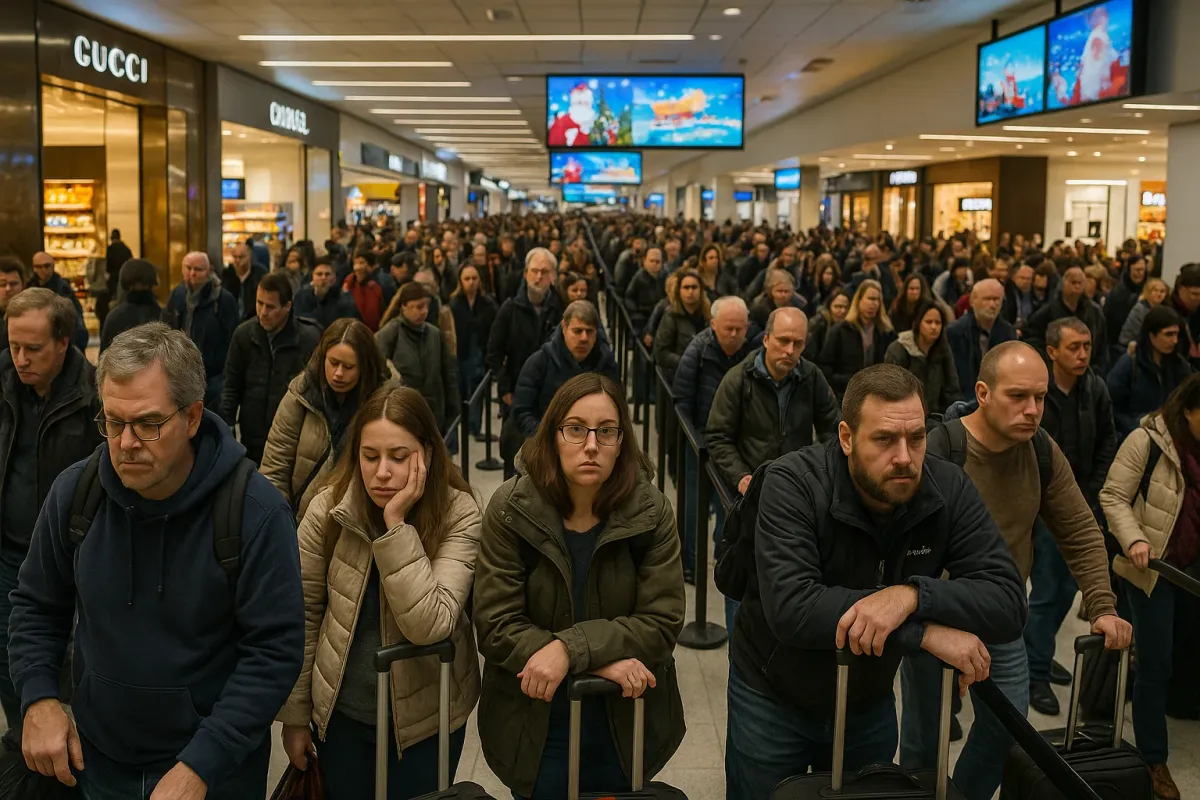
If your winter travel plans currently look like a live reenactment of “Waiting for Godot” at Gate C17, you’re not alone—and you’re definitely not the only one spending more than planned. The 2025 holiday travel season is on track to break records again, and behind every delayed flight, overstuffed carry-on, and $9 airport coffee is a booming money story that investors are quietly tracking.
From luggage trackers flying off Amazon shelves to credit card rewards programs quietly flexing their pricing power, the chaos you’re dreading is turning into a revenue surge across multiple sectors. This isn’t just about long TSA lines—it’s about who’s cashing in every time your flight gets pushed “just another 45 minutes.”
Let’s break down how the holiday travel nightmare is shaping real-time market trends—and where the money is moving right now.
Travel Tech Is Eating the Airport (And Investors Are Watching)
Remember when packing for a trip meant tossing clothes into a suitcase and hoping for the best? In 2025, it’s GPS tags, app-powered suitcases, AirTags in every bag, and noise-canceling everything. Amazon, Best Buy, and direct-to-consumer gadget brands are seeing a pre-holiday spike in travel tech sales as people arm themselves for inevitable chaos at the gate.
The trend is crystal clear: delayed flights and lost luggage headlines are pushing consumers toward “self-defense tech.” Luggage trackers (Apple AirTags, Tile), compact power banks, folding Bluetooth keyboards, and ANC headphones from Apple, Sony, and Bose are going from “nice to have” to “non-negotiable.” For investors, that means consumer electronics with a travel angle are quietly outperforming generic gadgets. Watch earnings calls from retailers and device makers this quarter—any mention of “travel category” or “holiday mobility demand” is basically code for “this chaos is good for business.”
Airlines Are Packed, Margins Are Thin, and Ancillary Fees Are the Real Winners
Holiday travel demand is off the charts again, with major carriers reporting near-full load factors on key routes. But here’s the twist: the real story isn’t just ticket sales—it’s the fee economy around them. Baggage fees, seat selection fees, early boarding, change fees, “priority” lines that don’t feel very priority—those tiny add-ons are now major line items in airlines’ revenue.
The more crowded and stressful peak travel gets, the more people cave and pay to avoid pain points: extra legroom, checked bags, and seats together for families. In a season when fuel costs and labor expenses keep pressure on margins, ancillary revenue is the shock absorber for airline balance sheets. Translation: the worse your boarding experience feels, the more the fee machine hums. For market-watchers, airline stocks are no longer just a play on demand; they’re a bet on how aggressively (and cleverly) carriers can monetize anxiety.
Airport Retail and Food: Inflation? What Inflation?
If you’ve bought a sandwich at an airport lately, you already know: prices at the terminal exist in another dimension. But as holiday congestion hits, that captive-audience pricing goes from annoying to insanely profitable. Duty-free shops, grab-and-go kiosks, chain coffee brands, and convenience retailers inside airports see a massive seasonal lift—not just in volume, but in pricing power.
With travelers stuck during long layovers or delays, spending on snacks, drinks, last-minute gifts, travel pillows, and even premium lounge passes spikes hard. In a world where many retail categories are fighting margin compression, airport and transit hubs are defying gravity. For investors, this is why many big consumer brands fight for airport presence and why some REITs and infrastructure funds with airport exposure are getting extra attention this season. The logic: stranded people are high-conversion customers.
Credit Card Rewards and BNPL Are Quietly Funding the Chaos
Behind every chaotic holiday trip is a not-so-silent financial partner: your wallet’s favorite rewards card. Travel cards from issuers like American Express, Chase, Capital One, and others have turned this season into a battleground for points-hungry consumers. Flight delays and cancellations make those lounge passes, trip protections, and emergency hotel coverage feel a lot more valuable than they did in 2018.
At the same time, “BNPL” (buy now, pay later) providers and flexible travel financing are creeping deeper into the booking experience. Flight, hotel, luggage, gadgets—more of it can be split into installments directly at checkout. That spreads out the pain of inflated holiday prices but concentrates risk in the consumer credit system. For market trends, this means two things: card networks and issuers collect more swipe fees and interest, while BNPL and fintech players get a seasonal usage spike that can pad growth metrics—right before 2026 regulators ask harder questions about consumer indebtedness.
Social Media Meltdowns Are Now a Real-Time Sentiment Indicator
Every holiday travel season now comes with its own content genre: airport TikToks, X (Twitter) rants, Instagram Stories from the Jetbridge of Doom. But this isn’t just digital drama—it’s a live data stream that brands, analysts, and even algorithms are watching. Viral clips of messed-up boarding processes, hours-long security lines, or standout “hero” employees can instantly move public perception of airlines, airports, and travel platforms.
Sentiment-tracking tools scrape these posts to measure consumer frustration or satisfaction in real time, and some funds now incorporate that data into short-term trading or risk models. When a particular airline is suddenly trending for all the wrong reasons, you can almost feel the optionality traders perk up. Meanwhile, savvy travel brands are responding faster on social channels, using compensation and recovery policies as a kind of customer-retention armor. The holiday chaos isn’t just noise online—it’s an alternative data feed with real market implications.
Conclusion
The 2025 holiday travel crush isn’t just a seasonal annoyance—it’s a full-on economic event that ripples through airlines, tech, retail, payments, and even social data. Every rolling suitcase and TSA bin represents a tiny transaction in a much bigger system that’s learning how to monetize inconvenience at scale.
If you’re a finance nerd stuck at the gate right now, you’re basically sitting in the middle of a live case study in modern consumer economics. The delays are painful, but the market signals are loud—and for investors paying attention, this year’s airport chaos is less “holiday horror” and more “real-time dashboard” of where the money is moving next.
Share this with the friend currently rage-refreshing their flight app—they might not make it home on time, but at least they’ll know who’s profiting from the madness.
Key Takeaway
The most important thing to remember from this article is that this information can change how you think about Market Trends.