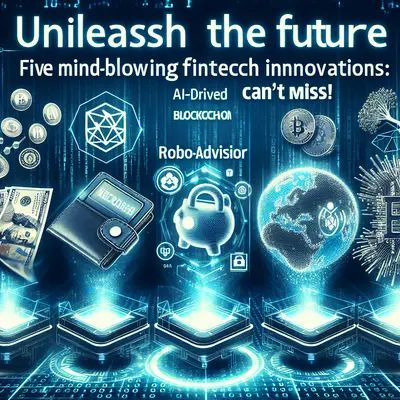
The money world is moving faster than your screen time report, and fintech is where all the plot twists are dropping. From AI that low‑key manages your cash to TikTok-style investing apps, we’re living through a full-on finance remake—and most people are still on the trailer.
This isn’t about boring bank updates. It’s about the tech, tools, and trends quietly rewriting how we save, spend, borrow, and invest—whether you’re deep into markets or just trying to make your paycheck hit different. Let’s tap into the five biggest fintech shifts your group chat will actually want to talk about.
1. AI Money Copilots Are Becoming Your New Default Bank
We’re past the “cute budgeting app” era—AI is sliding into the role of full-on money copilot.
Across banking and investing, AI is now:
- Analyzing your transaction history to predict bills and cash crunches before they happen
- Flagging weird activity in real time (fraud detection is getting seriously sharp)
- Powering robo-advisors that auto-balance your portfolio based on your risk and goals
- Helping banks approve loans faster by scanning way more data than a human ever could
- Raises your savings rate when your income bumps
- Nudges you when subscription creep is eating your budget
- Shifts your investments as markets move, without needing you to refresh charts all day
Big players like JPMorgan, Bank of America, and Goldman Sachs are investing heavily in AI to streamline everything from customer service to trading strategies. On the consumer side, we’re seeing tools that rewrite the “set it and forget it” game—think AI that:
The wild part? Most of this is running quietly in the background. Over the next few years, “calling your bank” might sound as old-school as “faxing your broker.”
2. Embedded Finance Is Turning Every App Into a Money App
Ordering food, shopping, booking travel—everything we do online is quietly merging with finance in a trend called embedded finance. Instead of needing a “bank app” to deal with money, your money just shows up wherever you already are.
Examples you’ve probably already used:
- Buy Now, Pay Later (BNPL) buttons at checkout (Klarna, Afterpay, Affirm)
- In-app wallets for ride-sharing, gaming, and marketplaces
- Brand cards and payment options baked into retailers’ own apps
- Offer loans at checkout
- Provide branded debit cards and rewards
- Manage payouts to sellers, drivers, or freelancers
- Fewer steps between “I want this” and “Paid”
- More options for how and when you pay
- Loyalty perks that live inside the apps you’re already obsessed with
Behind the scenes, fintech infrastructure companies are letting non-banks:
For you, that means:
The tradeoff: as everything becomes more seamless, it’s dangerously easy to overspend. The new skill? Learning to recognize the difference between “frictionless” and “mindless” when your finances are baked into every tap.
3. Real-Time Payments Are Killing the “Waiting for Cash to Clear” Era
The “funds will arrive in 3–5 business days” message? On its way to extinction.
Countries around the world are rolling out or upgrading real-time payment systems:
- In the U.S., the Federal Reserve launched FedNow in 2023 to support instant payments between participating banks
- Europe’s SEPA Instant system is expanding, and the EU is moving toward instant as a standard
- India’s UPI system is already processing billions of rapid-fire digital payments monthly
- Workers: Faster access to wages, even on same-day or on-demand schedules
- Freelancers & creators: Less time chasing invoices, more immediate payouts
- Small businesses: Stronger cash flow with instant settlement instead of batch delays
- Instant P2P transfers (no more “I’ll Venmo you later” delays)
- Fast funding for small-business loans
- Near-instant brokerage deposits so you can invest money right away
This unlocks huge shifts:
Fintech apps are building on top of this to deliver:
The flip side: speed cuts both ways. Instant money means instant mistakes if you send cash to the wrong person, and instant overdrafts if you’re not watching inflows vs. outflows. The next competitive edge isn’t just how fast money moves—it’s how clearly you can see it moving.
4. Regulated Crypto & Tokenization Are Entering Their “Serious” Era
Crypto is moving out of meme-land and into the suit-and-tie world of regulated finance.
Recent shifts include:
- Major regulators approving spot Bitcoin ETFs in markets like the U.S. and Europe, making crypto exposure available via regular brokerage accounts
- Big asset managers (BlackRock, Fidelity, etc.) launching regulated crypto products
- Governments testing or piloting central bank digital currencies (CBDCs) to modernize payments
- Real estate, art, and private credit are being fractionalized into digital tokens
- Institutions are exploring tokenized money market funds and bonds
- Settlement times for certain trades can potentially drop from days to minutes
- Access to new asset classes that used to be locked behind high minimums
- A cleaner, traceable record of ownership and transactions (on-chain receipts, basically)
- More overlap between “traditional finance” and “crypto-native” tools
At the same time, tokenization—putting ownership of assets on a blockchain—is gaining traction:
What this means for finance enthusiasts:
But regulation is tightening, and scams are still very real. The hype cycle is giving way to a “prove it or lose it” phase—projects now have to show real utility, not just vibes.
5. Fintech for Creators, Freelancers, and Side-Hustlers Is Exploding
The 9-to-5-only money model is officially outdated. Fintech is racing to keep up with the multi-income, creator, and gig lifestyle.
New tools are targeting:
- Creators & influencers: Revenue dashboards that track brand deals, ad income, affiliate links, and tips from multiple platforms
- Freelancers & consultants: Apps that bundle invoicing, contracts, tax estimates, and business banking
- Side-hustlers: Instant payout cards, micro-loans, and working capital tied to marketplace or platform earnings
- Services that estimate and auto-set aside your self-employment taxes
- Credit products that underwrite based on platform income (rideshare, creator platforms, marketplaces) rather than just W-2 history
- Micro-investing and micro-savings tools built directly into gig and creator dashboards
- Smarter cash flow smoothing
- Tools that treat you like a business, not just a consumer
- Data-driven insights based on your actual earning patterns instead of a generic paycheck template
We’re also seeing:
This is a big mindset shift: your “career” is no longer a single employer—it’s a portfolio of income streams. The fintech wave is building around that reality with:
The result: people who never fit the traditional finance mold finally get tools built for how they actually earn.
Conclusion
Fintech isn’t just an industry update—it’s the underlying code of how modern money works. AI copilots are quietly steering your accounts, embedded finance is turning every app into a financial touchpoint, real-time payments are vaporizing wait times, regulated crypto and tokenization are reshaping what “ownership” looks like, and creator-centric tools are rewriting how income flows.
The next power move isn’t memorizing every app on the market—it’s understanding these core shifts so you can ride the wave instead of reacting late. Share this with the friend who always finds the new fintech tool first…and then ask them which of these trends they’re already betting on.
Sources
- Federal Reserve – FedNow Service - Official overview of the FedNow instant payment system and its role in U.S. payments infrastructure
- European Central Bank – Instant Payments - Details on instant payment developments and policy in the Euro area
- JPMorgan – Artificial Intelligence in Financial Services - Insight into how a major bank is deploying AI across banking and markets
- U.S. Securities and Exchange Commission – Spot Bitcoin ETFs Filings - Information and filings related to the approval and regulation of spot Bitcoin exchange-traded products
- Harvard Business Review – The Growing Role of Fintech in the Gig Economy - Analysis of how fintech products are evolving to support gig workers and independent earners
Key Takeaway
The most important thing to remember from this article is that this information can change how you think about Fintech News.