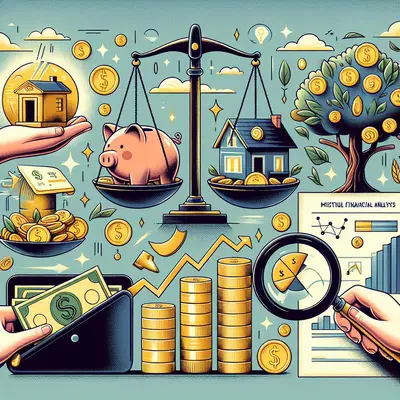
Money talk used to be dry, boring, and low‑key stressful. Not anymore. There’s a whole new wave of personal finance trends that feel less like punishment and more like designing your ideal life. This isn’t “skip your latte” energy—it’s “build a system so good you forget payday even happened.”
Let’s walk through five trending shifts money people are obsessing over right now—and why they’re worth stealing for your own playbook.
From Hustle Mode to “Automatic Money Systems”
The old flex: grinding nonstop.
The new flex: your money doing the work while you’re offline.
Instead of relying on willpower (“I swear I’ll save this month”), more people are building automatic systems that move money where it needs to go before they even touch it. Direct deposit hits, and instantly: a slice to savings, a slice to investing, a slice to bills, a guilt‑free slice to spending.
This is rooted in behavioral science: automation removes temptation and decision fatigue. Research shows people are way more likely to save when it’s automatic versus “optional later.” Think: auto‑transfers to a high‑yield savings account, auto‑investing into index funds, auto‑roundups into micro‑investment apps.
The vibe shift is huge: you’re not “trying to be disciplined” every month—you design a system once, then let it run in the background. You’re not waking up rich overnight, but six months into automation, your future self is basically sending you a thank‑you note.
Cash Is Out, Dashboards Are In
Paper budgets and random spreadsheets? Retired. The new trend is treating your finances like a live dashboard instead of a once‑a‑month report card.
Finance enthusiasts are building “Money Command Centers” using apps and tools that sync everything—checking, credit cards, investments, debt, even your net worth—into one real‑time view. You can see:
- How much you actually spend on food delivery vs. groceries
- How your net worth changes month to month
- Which subscriptions are silently draining your account
This is less about obsessing over every dollar and more about visibility. When you can see everything, you can adjust quickly: cancel dead weight, negotiate that bill, lower interest, or redirect extra cash to a goal.
The trend isn’t “track every cent perfectly,” it’s “get clear enough that your next move is obvious.” That clarity is addictive—and extremely shareable in screenshot form.
The “Three‑Bucket” Lifestyle Blueprint
Minimalism hit money. The more complex life gets, the more people are simplifying their financial structure into flexible “buckets” instead of 27 ultra‑specific categories.
A popular version of this is a three‑bucket lifestyle setup:
- Now Money – Your everyday spending (rent, groceries, fun, lifestyle).
- Later Money – Long‑term wealth (retirement accounts, index funds, long‑term investments).
- Option Money – Cash that buys freedom (emergency fund, career pivot fund, travel, starting a business).
Instead of obsessing over “Did I overspend on coffee?” the focus shifts to: “Are my buckets balanced with the life I want?” If your “Now Money” is maxed but your “Later” and “Option” buckets are starving, that’s a signal to rebalance.
The power move? Setting percentage targets for each bucket (for example: 60% Now, 25% Later, 15% Option) and adjusting as your life changes. First job? Heavier on “Now.” Planning a family or break from work? Bulk up “Option.” Eyeing early retirement? Boost “Later.” It’s flexible, aesthetic, and way easier to stick to.
Debt Strategy as a Power Move, Not a Secret
Debt used to be something people hid. Now, debt payoff is practically a community sport—with strategy at the center of it.
Two approaches are trending:
- Debt Snowball – Pay off the smallest balance first for quick wins and psychological momentum.
- Debt Avalanche – Attack the highest interest rate first to save the most money mathematically.
Finance enthusiasts are mixing both: they start with an avalanche on the ugliest rate, then sprinkle in a snowball win to stay motivated. The key shift is seeing debt as a math puzzle, not a personal failure. People are:
- Calling lenders to negotiate lower interest rates
- Refinancing or consolidating high‑interest debt
- Setting “debt payoff milestones” and celebrating each one
And instead of silently stressing, they’re sharing screenshots of progress bars, payoff dates, and before/after interest totals. Transparency turns shame into strategy—and strategy into content everyone wants to bookmark.
Investing as a Routine, Not a Personality
The loudest trend in personal finance right now: investing is getting boring—and that’s a compliment.
Instead of chasing the hype of “next big stock,” more people are leaning into:
- Broad, low‑fee index funds
- Dollar‑cost averaging (investing a fixed amount on a set schedule)
- Long‑term holding instead of constant trading
The win here is emotional: you don’t have to be glued to the market or pretend you’re a hedge fund. You decide on a simple strategy, automate contributions, and let time do the heavy lifting. Historically, diversified stock market investing has rewarded patient, consistent investors more than short‑term gamblers.
There’s still room for a “fun money” slice—maybe 5–10% of your portfolio—for higher‑risk bets, crypto experiments, or individual stocks. But the main portfolio is increasingly quiet, steady, and long‑term. That’s the new flex: not predicting the market, but outlasting it.
Conclusion
Personal finance is having a rebrand. It’s no longer about punishment, restriction, or anxiety—it's about designing systems, dashboards, and routines that support the life you actually want.
The five big shifts—automatic money systems, real‑time dashboards, three‑bucket life design, strategic debt payoff, and routine‑based investing—aren’t just trends. They’re frameworks you can customize and keep for life.
You don’t need perfection. You need a few smart moves on repeat. Set up one system, one dashboard, or one bucket today—and let your future self cash in on the compound effect of you getting started.
Sources
- Consumer Financial Protection Bureau – Automate Your Savings – Explains why automating savings works and practical ways to set it up
- FINRA – Dollar-Cost Averaging – Breaks down how routine investing can reduce risk and build long-term wealth
- U.S. Department of Education – Snowball vs. Avalanche for Debt – Compares two major debt payoff strategies and when to use each
- Vanguard – The Case for Low-Cost Index-Fund Investing – Research-backed overview of why diversified index funds are effective for most investors
- Harvard Business Review – The Power of Small Wins – Explores the psychology of quick wins and why strategies like the snowball method can boost motivation
Key Takeaway
The most important thing to remember from this article is that this information can change how you think about Personal Finance.